What is a Fire Skid?
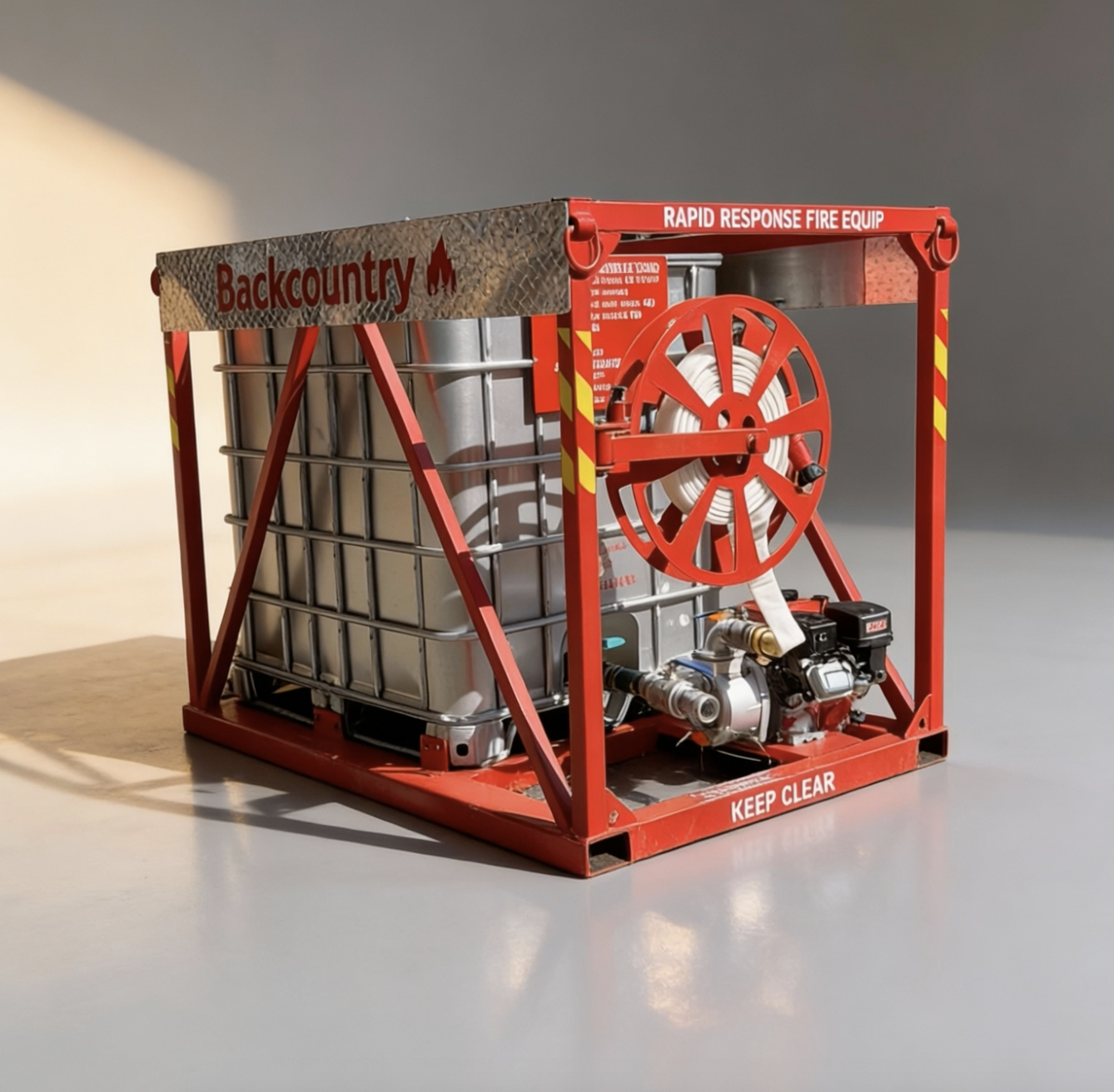
Backcountry Fire Skid
A fire skid (also commonly called a skid unit, slip-on unit, or simply a skid) is a compact, self-contained firefighting system mounted on a sturdy frame or "skid" platform. It's designed to turn almost any suitable vehicle—like a pickup truck or flatbed truck, —into a capable fire suppression apparatus without needing a dedicated fire engine.
These units are especially popular in wildland firefighting, rural areas, forestry operations, ranches, vineyards, HOAs in wildfire-prone zones, and for homeowners needing quick, agile response options where full-sized fire trucks can't easily go.
Core Components of a Typical Fire Skid
A fire skid usually includes:
Water tank — The water tank is the heart of the unit, tanks must be sturdy, easily accessible and
Pump — Often powered by a gasoline engines, these can be high-pressure/low-volume pumps (great for long hose reaches and water conservation) or higher-flow volume pumps. Pressures vary according to the engine and pump configuration and the desired use. .
Hoses and nozzles — Typically includes a hose reel (50–200 feet of booster or forestry hose), plus options for lay-flat hose, nozzles, and sometimes ground-sweep nozzles under the vehicle.
Additional features — Trailers, draft capability (pulling water from a source), tool storage, lighting, dust control systems, make these units very versatile around the homestead
The whole assembly is built on a rigid frame with forklift pockets or lifting eyes, making it easy to load/unload or transfer between vehicles.
Why Fire Skids Are An Essential Tool
Fire skids shine in situations where speed, mobility, and access are critical:
Wildland and brush fires — They allow rapid initial attack in remote or rugged terrain before larger resources arrive.
Rural and volunteer departments — Affordable way to boost capabilities without buying expensive custom apparatus.
Private property owners & ranches — Many homeowners in wildfire-prone areas (especially in the western US) install them on personal trucks for property defense.
Urban-wildland interface — Quick navigation through tight spaces or off-road paths where traditional engines struggle.
They're often called "mini fire trucks" for good reason—a standard pickup with a 200–300 gallon skid can deliver serious firefighting power while staying nimble and fuel-efficient.
Variations You Might See
UTV/ATV skids — Super lightweight (often 50–125 gallons), perfect for trails, prescribed burns, or tight access. While very mobile, limited water capacity is the drawback to these units.
Foam-capable units — Integrate foam injectors or around-the-pump systems for enhanced suppression. The added technology comes at extra initial system cost.
Custom builds — Some include rescue equipment, extra compartments, or even custom enclosures. The sky is the limit!
In short, a fire skid is one of the most versatile and cost-effective tools in modern firefighting—especially for initial attack, wildland scenarios, and areas where big rigs aren't practical. It's the kind of equipment that bridges the gap between "no fire response" and "full engine company," often making the difference in the first critical minutes of a fire.
If you're in a wildfire-risk area (like much of Arizona), these units have become increasingly common on both agency and private vehicles. With the cost of ownership now at an all time low, it may be time to think about getting a unit for your home or neighborhood.